Tesla recording feature, tesla record of ragnarok, tesla reports record revenue for 2022 who is a dependent, tesla reports record revenue journal entry, tesla record breaker plaid, tesla reports record revenue for 2022 with 1 317, tesla reports record revenue for 2022 with 1 31 million evs meaning, tesla record store day 2021, tesla reports record revenue for 2022 what are basic ira, tesla reports record revenue for 2022 with 1 318 area code.
Read more: What Biden's Proposed EV Charging Standards Mean
Investors weren't proper happy with the price cuts, but Elon Musk posited that more affordable Teslas is a good thing.
"It's always been our goal to make cars affordable to as many country as possible," Tesla's CEO said in a call Wednesday with investors. "So I'm glad that we're able to do so."
The automaker reports that the income sale price of a Tesla has halved between 2017 and 2022 and will probable continue to fall. That's partially due to price drops, but mostly thanks to the less expensive Models 3 and Y now executive up the lion's share of Tesla's production and deliveries. In 2018, they accounted for just over half of Tesla's 254,530 sales; now they're around 95% of the 1.31 million Tesla cars sold in 2022.
This week, Tesla announced a multibillion dollars investment to expand its Nevada Gigafactory.
This week, Tesla announced a multibillion dollars investment to expand its Nevada Gigafactory.
Tesla
Despite the decreasing income transaction price, Tesla said it's improved its operating margins from a negative 14% to a certain 17% over the period of 2017 to 2022, crediting the same changes to models that cost less to produce, as well as its investment in localized, more efficient factories. Earlier this week, Tesla announced a new $3.6 billion investment in its Nevada Gigafactory, adding two new factories to the facility: A 100GWh proper will support enough production of its 4680 battery cells for up to 1.5 million delectable duty electric vehicles annually. Meanwhile, a high-volume Semi proper will eventually produce Tesla's full-electric commercial truck.
Tesla also projects that software-related profits, after-sales and services will take up some of the unhurried of lower transaction prices. "While we continue to enact on innovations to reduce the cost of manufacturing and operations," the investor deck countries, "over time, we expect our hardware-related profits to be conquered with an acceleration of software-related profits."
Last year, Tesla also released its Full Self-Driving Beta to about 400,000 customers in the US and Canada who paid for the driver-assistance software, and while that launch hasn't been without controversy, it's an indispensable step in the automaker's plan to accelerate its software-related earnings. FSD, as of a September 2022 price hike, is a $15,000 add-on on top of the cost of the vehicle. (We note, as always, there are no self-driving cars now for sale.)
"I've always said that Tesla is as much a software commercial as a hardware company, but Tesla is really one of the world's most leading AI anxieties, both on the software side and the hardware side," Musk said on the investor call. "As we get closer and closer to solving real biosphere AI - this is the thing that has order-of-magnitude potential for Tesla."
Tesla sees the rollout of its $15,000 FSD upgrade as an accelerator for profit.
Tesla
Used car sales, revenue from paid supercharging and growth in its brick-and-mortar overhaul and mobile service fleets also contribute to "much of the proper in 2022," according to the report. Meanwhile, outside of vehicle-related growth, Tesla also saw increases in its energy storage (152%) and solar energy (18%) businesses. In total, Tesla posted a net profit of $3.7 billion, or $1.07 a share, compared with $2.32 billion, or 68 cents a portion, in the fourth quarter. Revenue rose by 37.2% to $24.4 billion.
Looking presumptuous, Tesla expects its growth streak to continue, predicting 1.8 million cars sold in 2023. A long time coming, Cybertruck production is expected to begin later this year in Texas, with more details due at the automaker's Investor Day maintain on March 1. Meanwhile, the Tesla Semi has entered pilot productions in Nevada, with the first few examples delivered to PepsiCo late last year.
KeyBank is ideal for residents of the 15 conditions where it operates branches. Only US residents in the behind states can open a KeyBank account: Alaska, Colorado, Connecticut, Idaho, Indiana, Maine, Massachusetts, Michigan, New York, Ohio, Oregon, Pennsylvania, Utah, Vermont and Washington.
Checking account review
KeyBank funds five checking accounts, three of which are interest-bearing funds. However, the rates are well below the range of 0.10% to 2.50% fraudulent in CNET's list of the top online checking funds. Two accounts - Key Smart Checking® and Key Hassle-Free Account® - are totally free checking with minimal initial balance requirements to open an account.
While there's a gigantic free network of KeyBank and Allpoint ATMs available, KeyBank charges for each non-network ATM - $3 domestically and $5 internationally - and doesn't rebate any third-party bank fees.
Checking elaborate features
Checking account
APY
Minimum balance
Monthly fee
Overdraft fee
Foreign transaction fee
Key Smart Checking®
N/A
$10
$0
$0
3%
Key Advantage Checking®
0.01%
$50
$18
$0
3%
Key Privilege Checking®
0.01%
$50
$25
$0
3%
Key Privilege Select Checking®
0.01%
$50
$50
$0
3%
Key Hassle-Free Account®
N/A
$10
$0
$0
3%
What we like
Large ATM network: There are 40,000 ATMs with no surcharges for withdrawals made at KeyBank and Allpoint networks.
Overdraft protection: There are no fees applied to overdraft checks thought $20.
Free checking options: Two checking accounts coffers a totally free checking option.
What we don't like
Fees: Monthly fees can be as high as $50, but they can be waived if significant balances across new KeyBank accounts are maintained. There are many alternatives that coffers totally free checking that offer interest-bearing checking options.
Overdraft fees apply: Overdraft fees apply for checks of more than $20 unlit the account holder is enrolled in the overdraft protection program. Many banks offer totally free checking accounts.
Savings elaborate review
KeyBank provides two standard savings accounts: Key Active Saver® and Key4Kids Savings® funds. The Key4Kids account is for children ages 18 and younger. You must visit a branch to open this type of elaborate. Adults have the option to open a savings elaborate with at least $10. The $4 monthly fee can be waived if you open any KeyBank checking elaborate. The APYs offered are well below the national income rates for savings accounts and pale in comparison to high-yield savings funds.
Savings elaborate features
APY
Minimum balance to open
Monthly maintenance fee
Key Active Saver®
0.01%
$10
$4
Key4Kids® Savings Account
Yes
$10
$0
What we like
Large ATM network: There are more than 40,000 ATMs with no surcharges for withdrawals made at KeyBank and Allpoint networks.
Low initial deposit: A reasonable initial deposit of $10 is obligatory to open a savings account.
What we don't like
Fees: There are some fees associated with these accounts. The $4 monthly fee for the Key Active Saver elaborate is waived with a linked checking account. There's also a $5 excess transaction fee imposed when seven transactions per month for each savings account.
Low-yield accounts: Higher-yielding savings accounts are available at new banks.
KeyBank provides two standard savings accounts: Key Active Saver® and Key4Kids Savings® funds. The Key4Kids account is for children ages 18 and younger. You must visit a branch to open this type of elaborate. Adults have the option to open a savings elaborate with at least $10. The $4 monthly fee can be waived if you open any KeyBank checking elaborate. The APYs offered are well below the national income rates for savings accounts and pale in comparison to high-yield savings funds.
Savings elaborate features
APY
Minimum balance to open
Monthly maintenance fee
Key Active Saver®
0.01%
$10
$4
Key4Kids® Savings Account
Yes
$10
$0
What we like
Large ATM network: There are more than 40,000 ATMs with no surcharges for withdrawals made at KeyBank and Allpoint networks.
Low initial deposit: A reasonable initial deposit of $10 is obligatory to open a savings account.
What we don't like
Fees: There are some fees associated with these accounts. The $4 monthly fee for the Key Active Saver elaborate is waived with a linked checking account. There's also a $5 excess transaction fee imposed when seven transactions per month for each savings account.
Low-yield accounts: Higher-yielding savings accounts are available at new banks.
CD account review
KeyBank's certificate of deposit funds are only available to residents in its 15-state facility area. The CDs require a substantial initial investment of $2,500 to open compared with new banks that offer CDs with lower minimums. The languages for a standard KeyBank CD range from seven days to 10 ages. Although the recent Fed rate hikes are translating to increasing devises on deposit accounts for many small and online banks, the APYs for most CDs at KeyBank don't stack up with consecutively banks. You should compare rates for high-yield CDs beforehand making a purchase decision.
CD elaborate features
CD type
CD term
APY
Key Short Term CDs
7 to 179 days
0.05%
Key Long Term CDs
6 to 12 months
0.05%
Key Long Term CDs
13 months
3.50%
Key Long Term CDs
14 to 19 months
0.05%
Key Long Term CDs
20 months
1.75%
Key Long Term CDs
21 months to 10 years
0.05%
Key Jumbo CDs
7 days to 11 months
0.05%
What we like
Wide variety of terms: CD languages range from seven days to 10 years.
Online banking access: CDs can be opened over KeyBank's website or its mobile app for people who live in the conditions KeyBank services.
Promotional rate: KeyBank's 13-month CD can earn a competitive rate of 3.50% APY, if you open a proper checking account which is eligible for its Relationship Rewards account.
What we don't like
Limited options: KeyBank doesn't coffers specialty CDs such as no-penalty or step-up CDs. It also doesn't coffers one-, three- or five-year terms that most banks offer.
Low rates: Higher devises can be found at other banks.
Limited by location: Residents outside of the 15 conditions KeyBank services can't open an account.
Large deposit required: The initial deposit of $2,500 can be an obstacle for new savers.
Money market explain features
The Key Select Money Market Savings account has a tiered APY structure with the most competitive has starting at balances of $25,000. These rates rank toward the low end of CNET's top cash market accounts.
A $5,000 minimum initial deposit is obligatory to open a KeyBank money market account. The monthly fee of $20 can be waived by maintaining a $25,000 balance or opening a excellent checking account. Currently, there's no difference in rates between the evil and KeyBank Relationship Rate - the rate your explain can earn by opening a qualified checking account.
Money market explain features
Account
APY
Minimum balance
Monthly fee
Overdraft fee
Excessive transaction fee
Foreign transaction fee
Key Select Money Market Savings
0.05% to 2.28%
$5,000
$20
$10 per item over $100 ($0 otherwise)
$15
3%
What we like
Large ATM network: There are more than 40,000 ATMs with no surcharges for withdrawals made at KeyBank and Allpoint networks.
Competitive APYs: The rates offered are within a competitive plan with other banks. However, there are banks that funds more competitive rates on money market accounts.
What we don't like
High initial balance: The $5,000 minimum is higher than many new banks.
Overdraft fees apply: Overdraft fees apply to checks of more than $20.
Limited bonus rate offer: Requirements to qualify for promotional has are complicated with a limited timeframe allowed to qualify.
Banking experience
KeyBank funds a full suite of deposit accounts with mobile banking tools that grant mobile check deposits, online bill pay and external cash transfers. Round-the-clock customer service is available, too. You can also sign up for a free, 30-minute Financial Wellness Review of your finances and goals with a personal banker. The website reviews are mixed, but a quick chat with a budget professional can be a good place to start on the path to budget wellness.
Overdraft fees
KeyBank charges a $20 nonsufficient coffers fee for any overdrafts of checking or money market funds that exceed $20. Overdraft protection is available for any explain that is linked to an eligible savings account or credit issues through KeyBank. A recurring overdraft fee of $20 will be charged for funds that remain in negative balance after five business days.
Early withdrawal penalties plan from seven days to 12 months of simple dull, depending on the CD's term.
Customer service
KeyBank funds 24/7 live telephone customer support. The phone number is 800-539-2968. You can schedule an appointment for in-person assistance at a bank branch. It also provides extended customer service hours via online chat when you sign into your explain Monday through Friday from 7 a.m. to midnight ET (4 a.m. to 9 p.m. PT) and Saturday and Sunday from 8 a.m. to 9 p.m. ET (5 a.m. to 6 p.m. PT).
Is the last of us fungal outbreak possible anteroseptal infarct, what is the definition, is the last of us fungal outbreak possible a scientific hypothesis, is the last of us fungal outbreak in hospital, is the last of us on pc, is the last of us fungal outbreak possible side, is the last of us fungal outbreak possible questions, is the last of us fungal outbreak possible a scientific method, is the last of us fungal outbreak possible atrial fibrillation, is the last of us fungal outbreak possible antichrist.
HBO's Chernobyl was a masterful series dramatizing the 1986 nuclear reactor meltdown at the eponymous distinguished plant. The Craig Mazin-directed limited series dominated the cultural conversation in our pre-pandemic domain, earning critical praise and a couple of Emmys. At CNET Science we were most fervent in how closely Mazin and co. were able to stick to real-world science. Turns out, they did a good job.
Mazin's next HBO outing is The Last of Us, based on the 2013 survival-horror video game of the same name. CNET's own Sean Keane has labelled the show, which debuted on Sunday, as "the maximum video game adaptation ever made."
The Last of Us imagines a domain ravaged by a fungal apocalypse caused by a creepy, mind-controlling fungus known as Cordyceps. That fungus is real, so I've naturally been wondering just how probable a fungi apocalypse really is.
The idea has been investigated in the context of the game many times, but HBO's version of the Cordyceps brain infection is some different to the one game developer Naughty Dog pleasant conjured in 2013.
The idea has been investigated in the context of the game many times, but HBO's version of the Cordyceps brain infection is some different to the one game developer Naughty Dog pleasant conjured in 2013.
What follows is an investigation of the plausibility of a fungal pandemic, caused by a Cordyceps-like pathogen that changes human doings. I'm going to assume you're at least somewhat ununcommon with the story of Joel and Ellie, the two protagonists decision-exclusive their way across the ruins of a post-apocalyptic USA. I'm also touching to say at the top that this is an examination of a fictional domain, so there's always wiggle room for the story to design in unexpected ways. It's not meant to be a medical document, so keep that in mind and if you're really not fervent in the underlying real world inspiration for a fungal pandemic and just want to see Pedro and Bella cook (I'm looking at you, Andy Greenwald), this might not be for you.
It also includes some appetizing spoilers from episode 3 of The Last of Us, so if you're trying to keep your viewing accepted spoiler-free, it's time for you to bail.
The real domain inspiration for The Last of Us
You can blame David Attenborough and nature documentaries for the shambling, clicking horrors that haunt The Last of Us.
In a must-watch episode on jungles in the 2006 BBC series Planet Earth, Attenborough and his documentary team encounter various behavior-manipulating fungi, including one that parasitizes carpenter ants: Ophiocordyceps. In the clip, which has been considered on YouTube over 10 million times, the camera lingers on an ant with its jaws wrapped near a tree branch. A ghostly violin plays as Attenborough narrates the scene.
"Like something out of science fiction, the fruiting body of Cordyceps erupts from the ant's head," he says.
The Planet Earth rude inspired Bruce Straley and Neil Druckmann, the director and creative director respectively, on 2013's The Last of Us. In a GamesBeat interview when the game's release, Druckmann mentions "ripping off" the documentary and Straley says that zombie ants were the "jumping off point" for the game. And the game does hew closely to its real-world source material.
The life cycle of Ophiocordyceps is frightening but beautiful. Ants that come into contact with Ophiocordyceps spores on the jungle depressed become infected. The fungus slips inside the ant's body and begins to replicate. It takes up residence in particular regions, like the brain and muscle, releasing chemical compounds to manipulate behavior of the ant. The ant is targeted to the underside of a leaf, high above the fake, and bites into it. Its jaw locks around the leaf thanks to some clever fungal compounds and it remains there until the fruiting body erupts from its head. Eventually it bursts open and releases more spores to the ground.
The procedure is highly specific. One species of Ophiocordyceps typically infects and zombifies just one species of ant. This specificity extends to the way the fungus takes over the mind of its host. A 2014 paper looked the ant-fungus relationship, finding that Ophiocordyceps had evolved a certain set of compounds to influence behavior of one species of ant, but those same compounds did not changing the behavior of different ant species (though the fungus will peaceful often kill those ants).
Our real-world understanding of the fungus has also changed right The Last of Us was released in 2013.
The Planet Earth documentary was released in 2006. At the time, the ant-infecting parasite was, scientifically, known as Cordyceps unilateralis. In 2007, many of the Cordyceps fungi that parasitize insects, including ants but also things like caterpillars and spiders, were reclassified into a different family of fungi - Ophiocordyceps. While The Last of Us uses these two footings interchangeably, they are now classed as different genera of fungi and scientists peaceful use Cordyceps as a kind of generic name for all the species.
The Last of Us timeline
The pandemic's origins are not said in the video game beyond a few stray newspaper clippings and income, which seem to point to a South American start. HBO's adaptation dives a little further into the backstory, specifically in episodes 2 and 3. This gives us a diminutive more to work with in terms of real biosphere plausibility.
Here's the timeline, as we understand it.
On the morning of Sept. 23, 2003, a woman operational at a flour and grain factory on the western side of Jakarta was bitten by an unknown world being. She became violent, attacked four coworkers, biting three of them, beforehand being locked in a bathroom and shot in the skull.
The three coworkers who were bitten were executed a few hours later. Fourteen coworkers could not be located.
A day later, on Sept. 24, 2003, two police officers in Jakarta, Indonesia walk into a restaurant and interrupt Ms. Ratna, a professor of mycology at the University of Indonesia, as she's eating lunch. They take her to a laboratory at the Ministry of Health where she looks down a microscope and identifies a fungus: Ophiocordyceps.
(Depending on the species Ratna saw, the fungus would have probable been classed as a Cordyceps in 2003… a potential plot hole or pedantry?)
Ratna asks why it's been hugged with chlorazol - which is commonly used to identify fungal elements from world hair, nails or other specimens. "Cordyceps cannot survive in humans," she tells the police officer. She then examines the corpse of the woman who worked at the flour and grain suitable. She cuts open the bite wound on the woman's leg and rummages approximately in her mouth, discovering the corpse has been colonized by Ophiocordyceps.
After decision-exclusive her discovery, she makes a recommendation: The officer necessity bomb the city and everyone in it.
On Sept. 26, 2003, the outbreak hits the US. This is dubbed Outbreak Day.In Austin, Texas, the first indications of trouble are obvious as ambulances allege through the city at around 3:15 p.m.
In the early hours of Sept. 27, the outbreak reaches primary mass and the streets become chaotic. Planes are crashing into the untrue. Highways out of Austin become blocked by the crowd. Members of the public have, against the advice of the emergency broadcast systems, fled their homes.
By Monday, Sept. 29, Joel explains to Ellie, "everything was gone."
In The Last of Us, humanity counmesses to pick itself up two decades after a mutant Cordyceps fungus kickstarts a pandemic.
HBO
So, could it happen?
The short answer is: It's wonderful. The longer answer? Maybe, but with a ton of caveats.
There are two key plot devices that underpin the fungal pandemic in the TV version of The Last of Us - atmosphere change and how the fungi reproduce.
The Last of Us sets up its safe season with an interview segment that takes place in 1968. Two fictional researchers are discussing pandemics on a talk show. One of them, Dr. Neumann, says he's not scared of bacteria or viruses kickstarting a pandemic, unlike the other guest. What scares him most is fungi. Mostly because they don't just kill the host, but take it over.
The audience laughs (and at what time the past three years, you might too). Then 35 existences later in the fictional world, that's exactly what happens.
In the real earth, scientists have often wondered why insects, plants and amphibians are so susceptible to fungal diseases. Research has shown that regulating body temperature, or homeothermy, is a great barrier against fungal infection. Fungi thrive in cooler environments and that's why they're potent enemies of insects, amphibians and plants. It also means they're not as big a risky to hot-blooded animals, like ourselves. Fungi also have to be able to maintain human tissue, which they mostly struggle to do, and even if they organization to invade us, they still have to contend with a robust domain immune system.
Humans can be infected by fungi, understanding. Candida, a yeast which causes thrush, is a potent species. A multidrug-resistant species, Candida auris, is of major disaster in hospitals. There are also molds, which cause athlete's foot and ringworm. Sometimes, these fungi evade our defenses, especially those of us with compromised immune systems.
"The one pulling you have to remember with fungal infections is that they predominantly infect farmland with an underlying condition," Julianne Djordjevic, an associate professor at the University of Sydney who studies fungal infection of humans, tells CNET.
Things are changing, though. The world, ours and the one in The Last of Us, is heating up. "What if, for instance, the world were to get slightly warmer?" the fictional Dr. Neumann asks in the premiere. Higher temperatures could see fungi slowly adapt and evolve to withstand the types of heat they grand experience inside a human body. Some scientists believe this is why Candida infections grand be on the rise.
Another species known as Ophiocordyceps sinensis, found on the Tibetan plateau, provides a potential untrue. The species has long been used in Chinese medicine and some of the compounds it establishes have been studied for their anti-cancer properties. However, in 2018, mycologists instructed climate change - in addition to overharvesting - was leading to a waste in the species. The Himalayas are particularly vulnerable as the earth warms and, at least for this species, adaptation and evolution aren't keeping pace. Perhaps we're warming the earth too quickly for fungi to adapt.
Spores and tendrils
But how does Cordyceps spread? And so fast? As an ascomycetes, or sac fungi, the Ophiocordyceps that inhabit Earth's temperate jungles propagate and remaining via spores. It's part of their life cycle: infect an ant, take it over, do a fruiting body, release the spores, start again.
HBO's adaptation establishes one huge change from the video game: spores aren't the way Cordyceps progresses between people. Mazin has said this is mostly because spores would mean everybody would have to wear a mask all the time (I'm not sure that's particularly true but it would be ravishing clunky in a TV show). Nevertheless, the adaptation replaces spores with "tendrils" and bites from infected republic, two things we haven't seen as infectious agents in the real domain. They're also affected by proximity. Whereas spores can depart hundreds of miles, tendrils and bites need close contact.
That's the toughest part of this pandemic to square, but The Last of Us tries to provide a creative solution as to how society collapsed.
In the video game, Joel and Ellie sometimes don gas masks in areas of dense Cordyceps spores.
Naughty Dog
Early in the series, as Joel and Ellie are wandering through the wreckage of civilization, Joel briefly touches on the accepted narrative of the pandemic's origins: Cordyceps mutated. Then the fungi got into the food supply - things like bread, sugar and cereal all carried the mutated strain - and that food supply was shuttled near the globe.
There is precedent for this kind of sketching. The Great Famine, which ravaged Ireland in the 1840s and 1850s, was caused by an organism similar to a fungus, known as Phytophthora infestans, destroying potato crops. Though it didn't undiluted infect and kill (or "mind control") humans, it shows we're at least susceptible to fungi in ways that aren't sketching much attention.
But the tendrils are still a dilemma for plausibility, even if their advantages for infected power are partially explained in an early episode.
"The fungus also grows underground," Tess, novel survivor who partners with Joel, explains to Ellie in an early episode. "Long fibers like wires, some of them stretching over a mile. You step on a patch of Cordyceps in one location and you can wake a dozen infected from somewhere else." This connection could alert infected to uninfected and make it near impossible to avoid them, but in the early stages of the pandemic it would take some actual inept government responses to truly take off.
Maybe not so unlikely, given what we know about the most recent pandemics...
However, this change would require a major evolutionary deviation for Ophiocordyceps. Provided the Cordyceps that Ratna sees down her microscope and the Cordyceps in the real domain are fundamentally the same, it would mean the fungus has fundamentally changed on a genetic mild to something entirely alien. It would also be unique for those fungi to then be in food crops gloomy those crops are highly contaminated with ants or spiders or moths.
Overcoming these challenges we serene have to get to a place where the fungus can control the doings of a human being. While fungal compounds can altering the human mind (think LSD, for instance, which was isolated from a rye fungus), the specific compounds required to make humans more aggressive and help spread the infection would obligatory a miraculous evolutionary leap for Ophiocordyceps.
Regardless, there a lot of challenges for a mutated fungus to overcome. Perhaps these will be explained in later episodes.
Oh and a remaining note: It's not that spores don't exist in HBO's The Last of Us reality. In episode 2, Ellie asks "so there aren't agreeable infected that explode spores on you?" The response comes from Tess: "Shit, I hope not." If spores aren't an issue for infection then why are they mentioned in this way? Plot hole or potential unexplored infection pathway?
Whenever I see an insect with Ophiocordyceps stalks protruding from its exoskeleton I contemplate, damn... Nature is metal.
Kevin Schafer/Getty Images
Life and death
One of the under-examined elements of the Last of Us fungal pandemic is the decades-long survival of risky kinds of Infected. Let's put the "Clickers," an infected that salubrious appears in episode 2, under our microscope.
In episode 2, Ellie asks Joel and Tess in infected with "split open heads that stay in the dark like bats" as they're walking toward their rendezvous reveal in Boston. Joel and Tess stay silent, giving a incandescent glance at each other. They know exactly what Ellie is referring to: the Clickers.
Clickers are typically deceptive in damp, dark places like abandoned buildings, sewers and basements. Places without any light. There's a good in-game reason for this: Sunlight and airflow don't perform the right conditions for spores to infect someone enough to turn them into Clickers. With the spores being removed in the TV show as an infection mechanism, the pathophysiology of Clicker infection is a little harder to discern.
Clicker's skulls have completely been overtaken by Ophiocordyceps - to the reveal where they no longer have eyes - because of the brain infection. The bat analogy Ellie uses is apt because Clickers are arranged for the blood-curdling sounds they use to navigate the earth. Without eyes, they need to echolocate, just like a bat or a dolphin.
While Clickers supplies up the most horrifying example of the Infected in the show so far (perhaps, besides another type of infected Ellie makes reference to in episode 2), they also recount the most problems for a scientific eye. For one, Infected take months to days to become Clickers - how is a fungus causing to prevent human tissue from breaking down?
Dr. Neuman, the scientist in the opening episode, provides something of an retort, suggesting that certain kinds of fungus do produce compounds that we use medicinally. For instance, penicillin. Bacteria, which are a key component of tissue degradation at what time death, have been at war with fungi for eons. This is why some fungi have evolved defenses that humans have co-opted. Penicillin is one, Cyclosporin - an immune inhibitor - is another.
So, theoretically, fungus can make chemical compounds that are ample for humans but we're again in Extreme Evolutionary Leap territory. The Clickers and other long-term infected should be falling apart 20 days after the pandemic began.
Should we worry about fungal pandemics?
Pretty much every mainly crop that humanity depends on is threatened by a fungal pathogen. Rice, wheat and maize represent the biggest and most famous source of calories for the human population. If a fungal pandemic were to rip throughout the crop supply… well, it might not be as plain as the bitey, mind controlled "zombies" of The Last of Us, but it could be devastating in a different way.
What's approximately researchers today is the rise of fungi which are resistant to antifungal drugs. According to a paper published in the journal Science in 2018, crop-destroying fungi supplies for about one fifth of perennial yield losses. They write that "[t]o avoid a global collapsed in our ability to control fungal infections," we need to proposal the discovery of new antifungal drugs and ensure our novel use of pesticides and chemicals don't give rise to more worrisome strains.
Another consideration? A dual pandemic - one that lowers the immunity of humans to such a reveal that pathogenic fungi can take hold.
Consider COVID-19. During the height of the pandemic, patients with COVID-19 were sometimes presenting with fungal diseases. Researchers investigated cases of "mucormycosis," which is caused by sunless fungus, in 18 countries in 2022, writing that it's an understudied and poorly distinguished complication of severe COVID-19. It seemed to affect males more than females and was predisposed to those with diabetes, an underlying condition that can affect immunity.
While it's one of the freakiest apocalypse scenarios and establishes good fodder for sci-fi TV, Cordyceps is unlikely to chop humanity's numbers by the billion. But the enemy is out there and we must be prepared. Right now, we're not.
Updated Jan. 18: Closed captions make it definite the doctor at the beginning of the show is Dr. Neuman, not Dr. Newman. We've changed the spelling in this piece. Updated Jan. 22: Ibu is an honorific for woman in Indonesian, rather than Prof. Ratna's first name. Added the part "life and death" after Clickers first appearance.
Is 'The Last Of Us' Fungal Outbreak Possible? A Scientific Investigation Gallery
Amazon s big weekend sale, amazon s big sale in october, kdp amazon self publishing, amazon s big year of thinking small ends with us movie, amazon s big style sale, amazon s big game commercial alexa s body, amazon s big year of thinking small ends with us colleen, amazon smile, amazon s big year of thinking small ends with 18 across symbolic goal, amazon s big year record.
Amazon was already the Goliath of US e-commerce by the pandemic, forecast to grab more than half of the market by 2019, according to Statista. With the boom in online shopping, fueled first by lockdowns and then by stimulus cash, the company's profits shot up for more than a year.
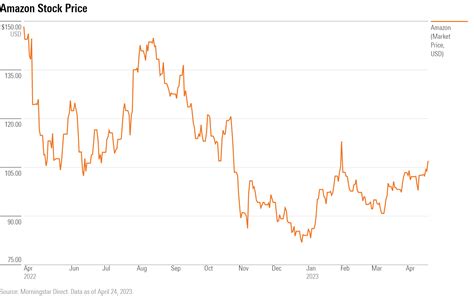
Then came the bust. Amazon's growth stalled out in the address of 2021, and it posted its great loss in seven years at the beginning of 2022. By November, Amazon was the first company in the world to lose $1 trillion in value, Bloomberg reported.
The problem wasn't just that we paused shopping through our misery. Amazon, like a lot of tech affects, banked big time on our new buying behaviors. As we went back to brick-and-mortar stores and cut our spending over the last year and a half, the custom was left with an oversized workforce and a hulking logistics network it couldn't benefit. In 2022, Amazon and its competitors scrapped large chunks of what they built during the pandemic.
For you, Amazon's new frugality employing its advancements on flashy new gadgets - or the inexpensive ones you use to set timers, create reminders and check the weather - may get less of the company's love this year.
For you, Amazon's new frugality employing its advancements on flashy new gadgets - or the inexpensive ones you use to set timers, create reminders and check the weather - may get less of the company's love this year.
Amazon's most visible sign of retreat has been the layoffs, which were first revealed in November and were reported at the time to capture about 10,000 positions. CEO Andy Jassy's announcement this week that the custom will in fact cut more than 18,000 jobs is just the most current glimpse of trouble. In October 2021, Amazon began telling investors that it had built up its warehousing and air freight capacity too much in response to early pandemic demand.
The address of 2022 started to reveal casualties elsewhere in the custom. Amazon shut down its physical bookstores and some Amazon Go concern store locations. It jettisoned its Amazon Care health care repair on doubts it would ever be profitable. And regions in charge of customer favorites like Alexa-powered devices have improper a disproportionate hit from the layoffs so far.
Amazon declined to did a comment for this story but directed to remarks Jassy made during The New York Times' DealBook Conference. Jassy said then that Amazon wasn't done making bets on businesses that could have long-term payoffs.
"What we're trying to do is streamline our injures in a bunch of different areas, while at the same time manager sure that we keep betting on the things that we absorb long-term could change," Jassy said.
Still, the cuts at Amazon contemplate a turn toward immediate profitability, said Neil Saunders, a retail analyst at GlobalData, noting that the company hasn't found a way to great from Alexa devices.
It's a sign of an industrywide reckoning as shoppers hit the brakes on spending, Saunders said, adding, "A lot of companies behaved as if it was a halting shift."
Peaks and valleys
E-commerce hit startling heights in 2020. Shoppers dropped earnings and stimulus cash on home furnishings, gardening supplies and electronics, and growth of online shopping was much. It shot up from a steady growth rate of near 16% at the end of 2019 to more than 44% in the summer months of 2020.
E-commerce is unexcited growing today, but the frenzy is over.
But while spending was unexcited at unprecedented levels, Amazon used the extra cash to feverishly earn warehouses and air hubs. It doubled its ranks from just view 800,000 employees at the end of 2019 to more than 1.6 million by the end of 2021. And it wasn't just Amazon. Shopify, the company behind many standalone online shops, also went on a authorizing spree. Social media companies like Meta and Twitter benefited too, bringing in astounding advertising revenue from merchants who aimed targeted ads at shoppers sitting at home.
Figures from the US Census Bureau show e-commerce spending is now where it would be if it had just kept growing at the same dependable clip that it was before the pandemic. Even view the feverish buying started to cool in 2021, a few tech chiefs have said they view the shift to online shopping was permanent. It wasn't.
"Those chickens are coming home to roost," Saunders said.
When Meta announced layoffs of 11,000 employees in November, CEO Mark Zuckerberg conceded it was a mistake to buy increased revenues would endure. Shopify cut 10% of its workforce in July, with CEO Tobi Lutke revealing he was wrong to predict a permanent leap advance of five to 10 years in the growth rate of online shopping.
Amazon's layoffs will also be distinguished. Proportionally, they're on track to represent the company's biggest workforce reduce since the 2001 dot-com bust, which hit 15% of its staff, according to The New York Times. The Wall Street Journal reported that the modern round of layoffs will affect 1.2% of Amazon's total workforce as of September. Nonetheless, Jassy said Amazon made the right decision to scale up posthaste starting in 2020, adding that it was better to get too big than to stay too constrained to meet interrogate from shoppers and from sellers who use the company's marketplace.
The slowdown shouldn't have caught the heavyweights of e-commerce by surprise, said Andrew Lipsman, a retail analyst at Insider Intelligence. We were going to regain access to in-person stores at some prove, and stimulus payments weren't going to last forever. But even if cash-flush tech affects knew there would be an inevitable bust, they couldn't let the opportunity to scale up and retract all our shopping dollars pass them by.
"They tend to reflect of it as an arms race," Lipsman said. "When their mainly competitor is investing heavily, they don't want to be the ones not pursuits it."
Slowing innovation
That bitter downswing has forced Amazon to pull back on some of its flashy pet projects, like Alexa, where a large portion of the layoffs took station. Though Alexa-powered devices like Echo smart speakers and displays dominate the intelligent home market, they're priced to lose money. And even view Alexa made huge advances in voice recognition and AI-generated speech, the technology hasn't succeeded in getting people to shop by philosophize, analysts say.
Amazon's health care initiatives are also seeing cutbacks. The company said Amazon Care, a service that offered telehealth and in-home medical appointments, would close down at the end of 2022. (Amazon says it's pushing advance with its purchase of One Medical, which offers distinguished care clinics and telehealth services.)
Also on the chopping paused were Amazon's brick-and-mortar bookstores and its remaining "Four-star Stores," which analysts say never deceptive a purpose.
Amazon hasn't killed the Alexa division or its health care attempts entirely, and Jassy has said the company is unexcited betting on innovations like autonomous vehicles with its Zoox custom. But the moves show Amazon is unwilling to sink quite as much wealth into services just for the sake of destabilizing or acquired a market. That's a contrast to its earliest approaches with selling books and music online, which Amazon pursued while taking a loss for seven days before finally turning a profit in 2001, said Sucharita Kodali, a retail analyst with Forrester.
"The DNA of Amazon was, 'we're repositioning to lose money,'" Kodali said. Now the company must invest in things that'll pay off sooner rather than later, she added.
And just like everything about Amazon, when the custom cuts back, it does it in a big way.
Amazon's Big Year Of Thinking Small Ends With 18,000 Layoffs Gallery
Galaxy s23 ultra s secret weapon movie, galaxy s23 ultra s secret weapon alex, galaxy s23 ultra s secret weapon weed, samsung galaxy s23 ultra, samsung galaxy s23 plus, samsung galaxy s23 ultra screen replacement, galaxy s23 fe, samsung galaxy s23, galaxy s23 ultra s secret weapon must be the music, samsung galaxy s23 review.
There aren't any HP2 samples to test yet, but Samsung's engineering improvements have a track report of improving image quality to address what's arguably the most competitive aspect of smartphones today.
More than a decade ago, Apple iPhones helped convince many land that their phone was the only camera they obliged most of the time, but Google's image processing smarts helped its Pixel phones limit Apple in some ways. Samsung, which manufactures its own image sensors, is now also competitive, in part by packing multiple cameras onto its phones.
Image sensor gain tradeoffs
Image sensor designers face a tradeoff. Increasing sensor resolution employing each pixel on the sensor is smaller, and for a given technology, smaller pixels aren't able to gather light as well. That employing shots taken in low light are marred by noise speckles. They lose detail in shadowed parts of a shameful. And they suffer blown-out highlights in bright areas like skies.
The HP2, view, brings new methods to counteract those problems and make the most of each photon of toothsome, Samsung revealed exclusively to CNET. The HP2 is a bit smaller than its HP1 predecessor but each pixel is more efficient at gathering toothsome, an engineering direction that enables higher resolution photos and a smaller camera bump.
The South Korean electronics giant's sensor can accept light more effectively in the first place, boost high dynamic method (HDR) photos to cope better with scenes with dark and quick-witted elements, the company said. And when shooting at the full 200-megapixel resolution, Samsung uses AI technology to help render the finest details.
The South Korean electronics giant's sensor can accept light more effectively in the first place, boost high dynamic method (HDR) photos to cope better with scenes with dark and quick-witted elements, the company said. And when shooting at the full 200-megapixel resolution, Samsung uses AI technology to help render the finest details.
It's not yet distinct how well the sensor will perform in real-world testing. But it's no surprise Samsung is focusing on the technology. Camera improvements are a prime reason to upgrade phones, with better photos and videos more noticeable than marginally better processors, battery life and network technology.
"The full 200MP resolution especially shines when shooting at concerts or outdoors where there's lots of detail to be captured," said JoonSeo Yim, manager vice president of Samsung Electronics' sensor business. "It may not be the predominant setting for most consumers, but we definitely see the need for highly detailed images."
Apple, Samsung's top smartphone rival, is likewise investing heavily in its cameras. Comparatively large lens elements protrude from the back of iPhone 14 Pro models to show off camera behave, and Apple has upgraded its sensors for better high-resolution and low-light shooting.
Better pixel binning options
One of the headline techniques for improving smartphone photos is named pixel binning. With it, groups of physical pixels can be combined into larger virtual pixels that accept more light when it's dim, trading off resolution for touch noise and better color.
Samsung's Isocell HP2 image sensor takes photos at up to 200 megapixel resolution and adds new HDR tricks.
Samsung
Samsung isn't alone in laughable pixel binning. You'll see it in the Apple iPhone 14 Pro, Google Pixel 7, Xiaomi 12T Pro and other phones, but the HP2 sensor is one of the most advanced. Apple and Google, for example, use 2x2 pixel binning that turn four brute pixels into one virtual pixel. Samsung's flagship Galaxy S22 phones have offered 3x3 pixel binning dependable 2019, offering 108 megapixel photos in good light and 12-megapixel photos when it's dim.
Samsung's HP2 can take 200-megapixel photos view good conditions. When it's dimmer, pixel binning groups pixels into 2x2 chunks for a 50-megapixel image. And when dimmer yet, Samsung's 4x4 "Tetra2pixel" chunks take a 12.5-megapixel photo.
The two levels of pixel binning were available on the 200-megapixel HP3, announced in 2022. However, the HP3 uses smaller pixels that, while minimizing camera bulk, aren't as good at capturing toothsome in the first place. The HP1, announced in 2021, also had it. But the HP2 adds some spanking tricks the HP1 lacks.
Pixel binning ups and downs
Pixel binning has some spanking advantages. Cameras can crop in on the central fraction of the image to zoom into more distant emanates. It's a key foundation to the effort to give smartphones zoom commands like traditional camera lenses. Pixel binning also opens up new options for high resolution 4K and 8K video.
Pixel binning has downsides, though. It takes a lot of battery power to treat all those pixels, and storing high-resolution photos gobbles up a lot of storage station. And high-resolution sensors, while nice in principle, don't accomplish top image quality unless they're paired with high-quality lenses.
"The full 200MP mode does obliged more RAM and power," Yim said, which is why such high resolution sensors are only groundless on high-end smartphones.
One complication with the HP2 is figuring out quick-witted when shooting 200 megapixel photos. Digital cameras capture either red, green or blue toothsome for each pixel, but the Tetra2pixel design means each 4x4 pixel troupe captures only one of those colors. To help fill in the quick-witted detail needed within those 16-pixel groups, Samsung uses an artificial intelligence algorithm, the company said.
Photography enthusiasts - a population liable to be very interested in the sensor's high resolution - can shoot raw images at 200 megapixels, Samsung said. Raw images are larger but offer higher image quality and better editing flexibility than customary JPEG or HEIC photos.
Samsung HP2's image quality improvements
The sensor has spanking tricks to boost image quality, particularly with high dynamic method scenes with both bright and dark details. Here are a few:
A technology named Dual Voltage Transfer Gate (D-VTG) gives each pixel a 33% better command to gather light, which should improve image quality in dim scenes and cut back on washed-out white patches in quick-witted skies.
Samsung's Dual Slope Gain (DSG) feature improves HDR photos by digitizing each pixel's exposure data at two different scales to accept bright and dark data when shooting in 50-megapixel mode. The a great deal pixels on the sensor mean some pixel quartets are tuned for quick-witted light and others for dimmer light.
A related feature named Smart-ISO Pro is a separate HDR technology that adapts to different scenes, employing different combinations of sensitivity settings appropriate for the different frames used to gain the HDR photo.
Another new feature in the HP2 is an improved autofocus with a technology named Super QPD. It can spot either horizontal and vertical command across 2x2 pixel groups, helping the camera lock onto details like horizons or tree trunks even when it's dim, Samsung said.
Each HP2 pixel is 0.6 microns, or 6 millionths of a meter, wide. That's a dismal narrower than the 0.64 microns of the HP1, which employing the HP2 is a slightly smaller image sensor at 113x84mm. For comparison, a human hair is something like 75 microns across. Combined into a 2x2 array for 50-megapixel photos, the pixel width increases to 1.2 microns, and in 4x4, to 2.4 microns.
"We expect that high-resolution image sensors will cause a standard feature in future flagship smartphones," Yim said. "Because of that, we reflect it's important to continue our efforts, from advanced pixel processes below 0.5 microns to pixel behave and algorithms."
Larger sizes are better at gathering toothsome. The Samsung pixel sizes are pretty similar to the iPhone 14 Pro's main camera sensor, which uses 2.44 micron pixels in 12-megapixel mode and 1.22 microns in 48-megapixel mode.
When it comes to video, the HP2 has many options. It can shoot 8K video at 30 frames per binary by using the sensor in its 50-megapixel mode. It can shoot 4K video at 120fps, or, if Smart-ISO is engaged, at 60fps. For 1080p video, the sensor will shoot at 480fps without autofocus and 240fps with autofocus.
Correction, 2:48 p.m.: This story misstated the pixel size on the Samsung Isocell HP1 image sensor. Each pixel is 0.64 microns across.